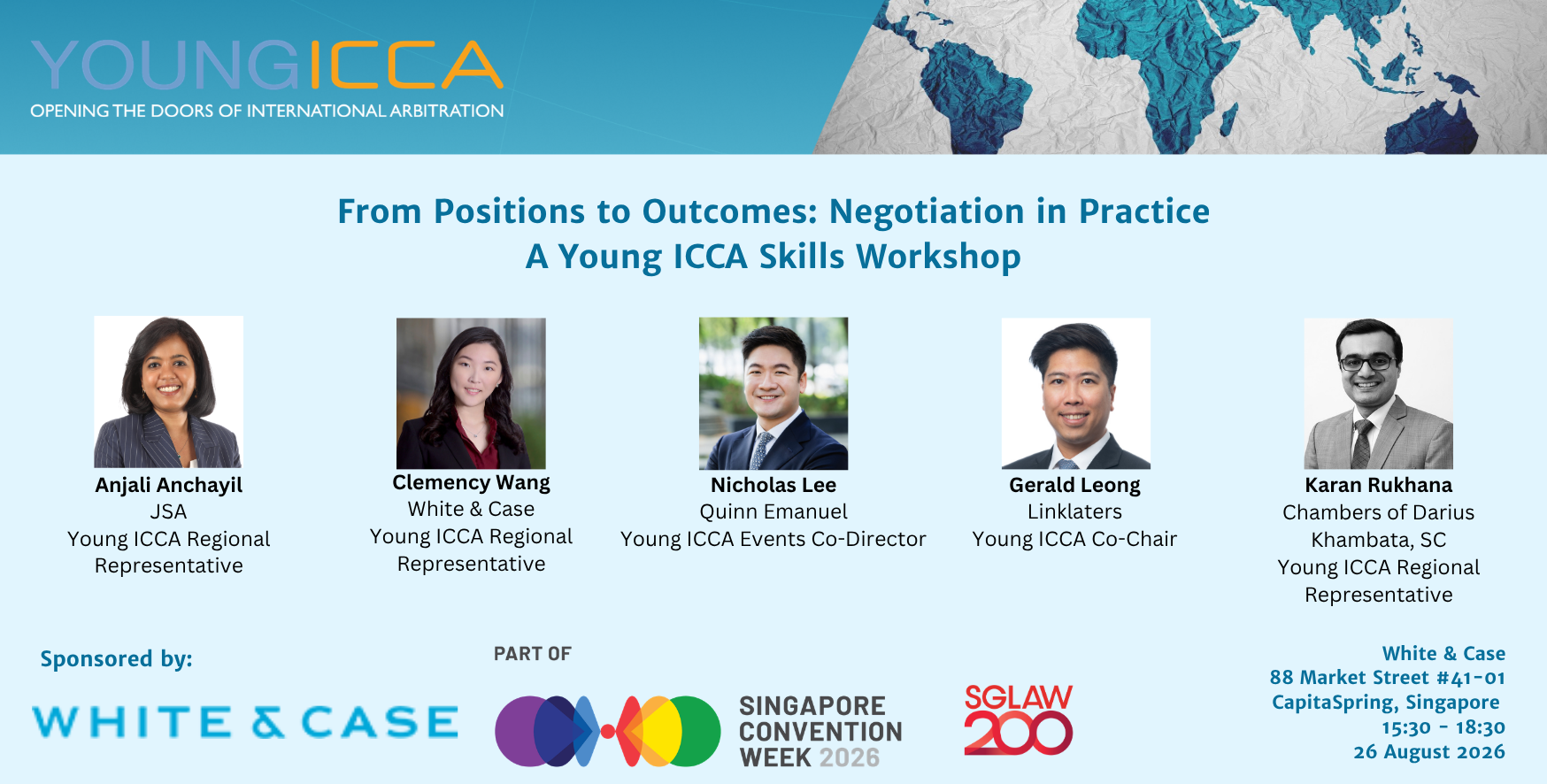
From Positions to Outcomes: Negotiation in Practice – a Young ICCA Skills Workshop


Young ICCA is bringing one of its flagship skills workshops to Singapore Convention Week 2026, and you’re invited!
This highly interactive session will put participants in negotiation scenarios designed to testing how you prepare, think, and respond in real time. Through live exercises and guided discussion, participants will sharpen their instincts, refine strategy, and build confidence handling counterparties under pressure.
Designed for young arbitration practitioners, this workshop offers practical tools applicable immediately – in negotiations that matter.
The session will be followed by refreshments to allow attendees to network in an informal setting.
Please note that this event is in-person only, and space is limited.
Post-Event Report
Reported by Nolan Lee (White & Case)
On 26 August, as part of the 2026 Singapore Convention Week, Young ICCA hosted an interactive negotiation workshop with hands-on negotiation exercises built around a fictitious dispute prepared by Young ICCA Co-Director for Events Nicholas Lee (Quinn Emanuel, Singapore) and immediate past Co-Chair Eva Chan. The workshop was hosted by White & Case.
Opening Remarks
Clemency Wang (White & Case, Shanghai) opened the workshop by observing that arbitration lawyers negotiate constantly — whether over procedural timelines, settlement discussions, or managing client expectations. She emphasized that the skills of knowing when to listen and when to trade are just as important as advocacy skills. Clemency’s central message was that a perfect deal beats a winning argument. She encouraged young lawyers to start practicing these skills early, rather than treating negotiation as a skill that develops only through years of experience.
Gerald Leong (Linklaters, London), Co-Chair of Young ICCA, then gave a brief overview of Young ICCA — the largest organization for young arbitration practitioners globally with around 23,000 members across 144 jurisdictions — before the event proceeded.
Principles of Negotiation
Nicholas introduced the principles of negotiation, starting with the distinction between competitive negotiation, where the aim is to “win” at the other side’s expense, and collaborative negotiation, which focuses on increasing the overall value available to both parties. He then set out four elements of a well-negotiated agreement: people, interests, options, and criteria. Nicholas highlighted that a party’s interest is not always aligned with its stated position and that it is the job of counsel to tease out what is underneath the tip of the iceberg. Nicholas stressed that arguing is distinct from persuasion, where cooperation is key, and that a negotiation is fundamentally different from a hearing.
Hands-on Negotiation Exercise
Participants then split into pairs, each representing either the Claimant or the Respondent in a hypothetical dispute involving defective solar panels. The first round of negotiations (30 minutes) resembled pre-arbitration negotiations, where neither party had the full picture and only about a quarter of the pairs reached an agreement. The second round of negotiations (30 minutes) resembled mid-arbitration negotiations, where new facts surfaced through disclosure and the parties’ experts provided their opinions. All but one pair settled the dispute.
Young ICCA Regional Representatives Anjali Anchayil (JSA Advocates & Solicitors, India) and Karan Rukhana (Chambers of Darius Khambata, SC, India) then unpacked the two rounds of negotiations. They explained that the increased number of settlements in round two demonstrated the importance of the interpersonal relationship between counsel and the value of understanding the counterparty’s position. Anjali and Karan also analyzed each pair’s settlement results by reference to the concepts of BATNA (Best Alternative to a Negotiated Agreement) and ZOPA (Zone of Potential Agreement), and by comparing the outcomes against a hypothetical tribunal award. Comparing the negotiated results against the hypothetical award made one thing clear — even the “winner” of the arbitration was a “loser” compared to what it could have achieved through negotiation.
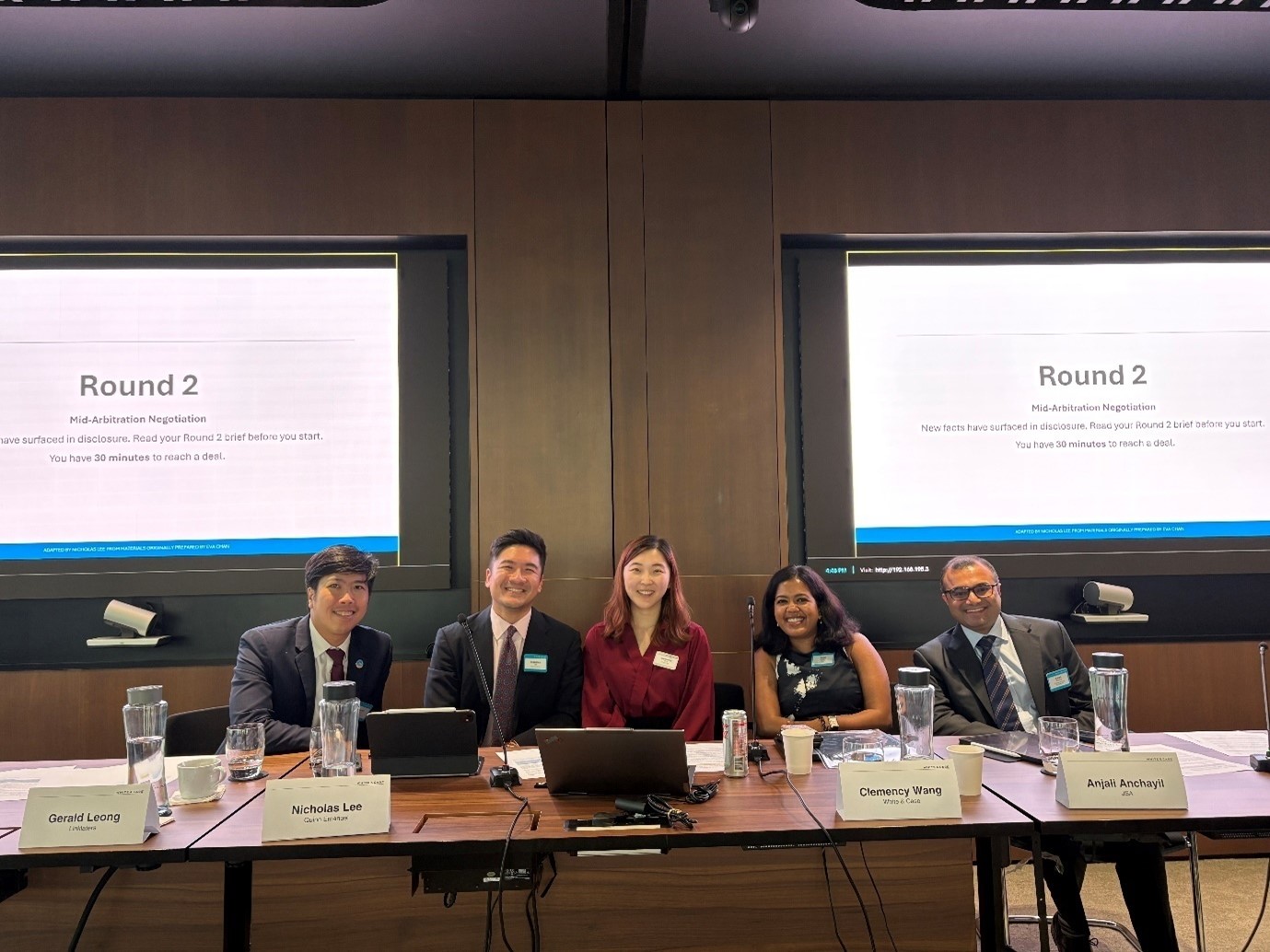
L-R: Gerald Leong, Nicholas Lee, Clemency Wang, Anjali Anchayil, and Karan Rukhana.

Participants pairing up for the hands-on negotiation exercise.
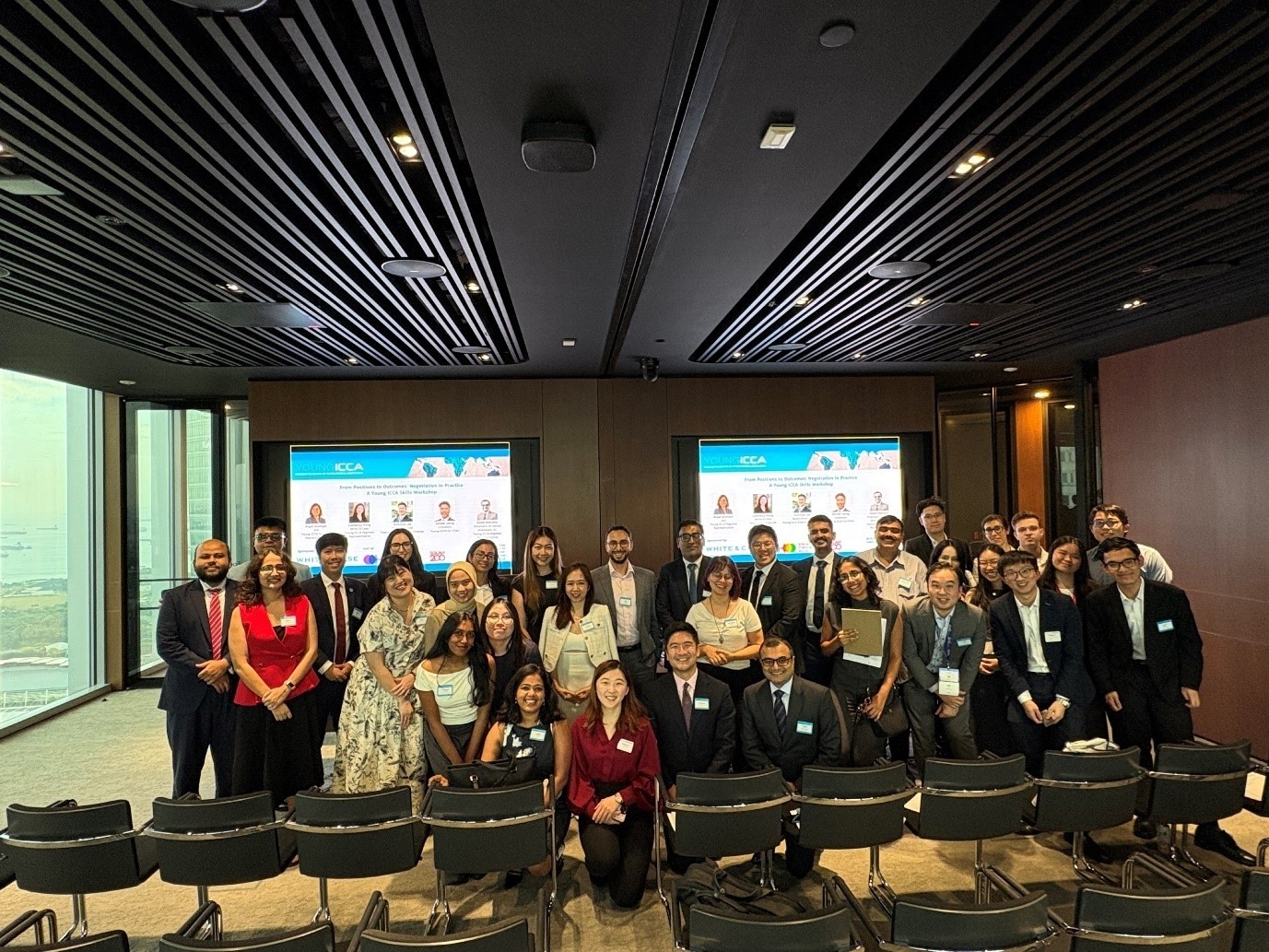
Speakers and participants.
Want to receive event updates from Young ICCA?
Sign up for Young ICCA Membership and you'll receive event notifications direct to your inbox.