Young ICCA Oral Advocacy Skills Workshop


Post-Event Report
Post-Event Report by Anandini Saha
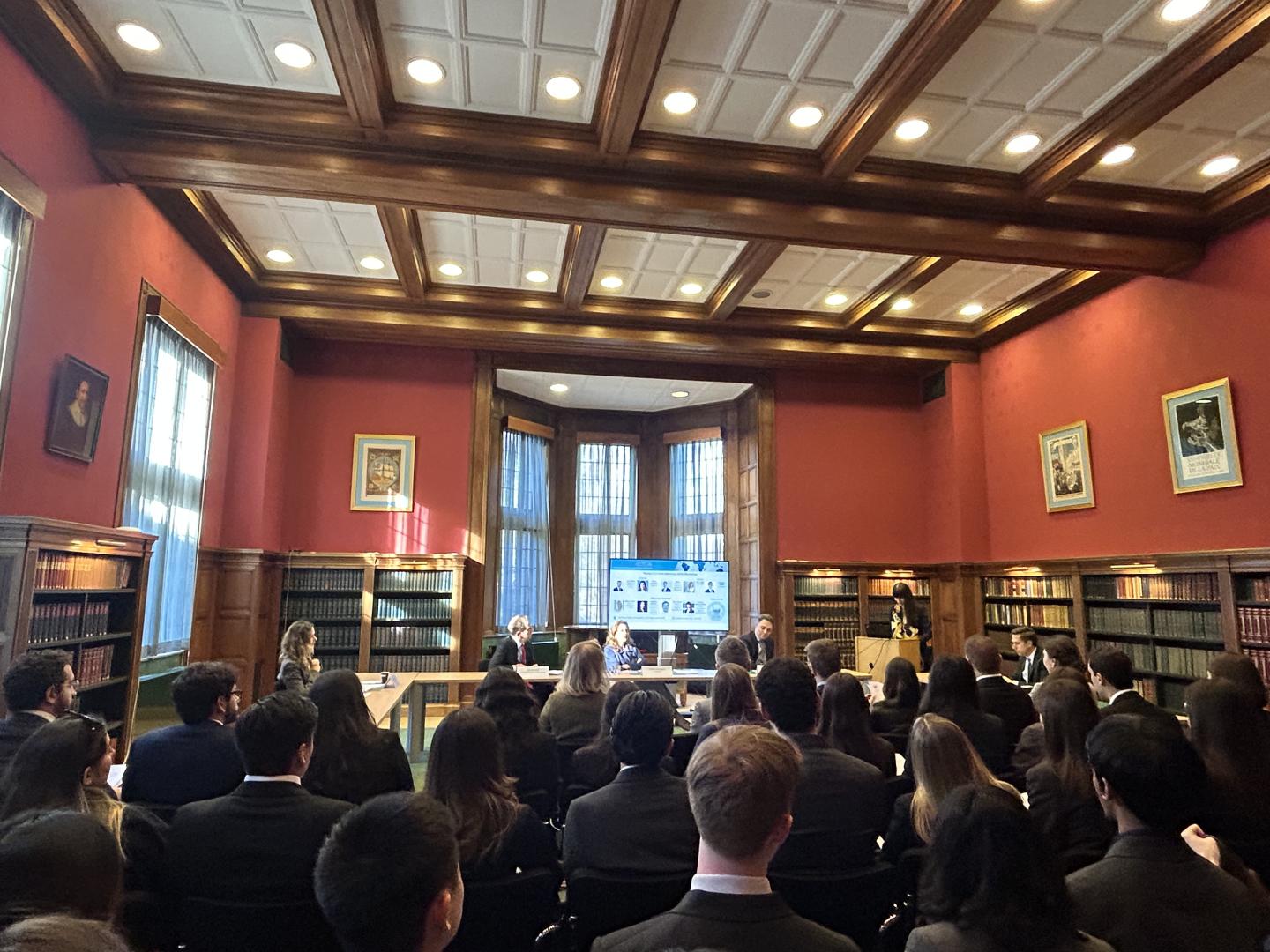
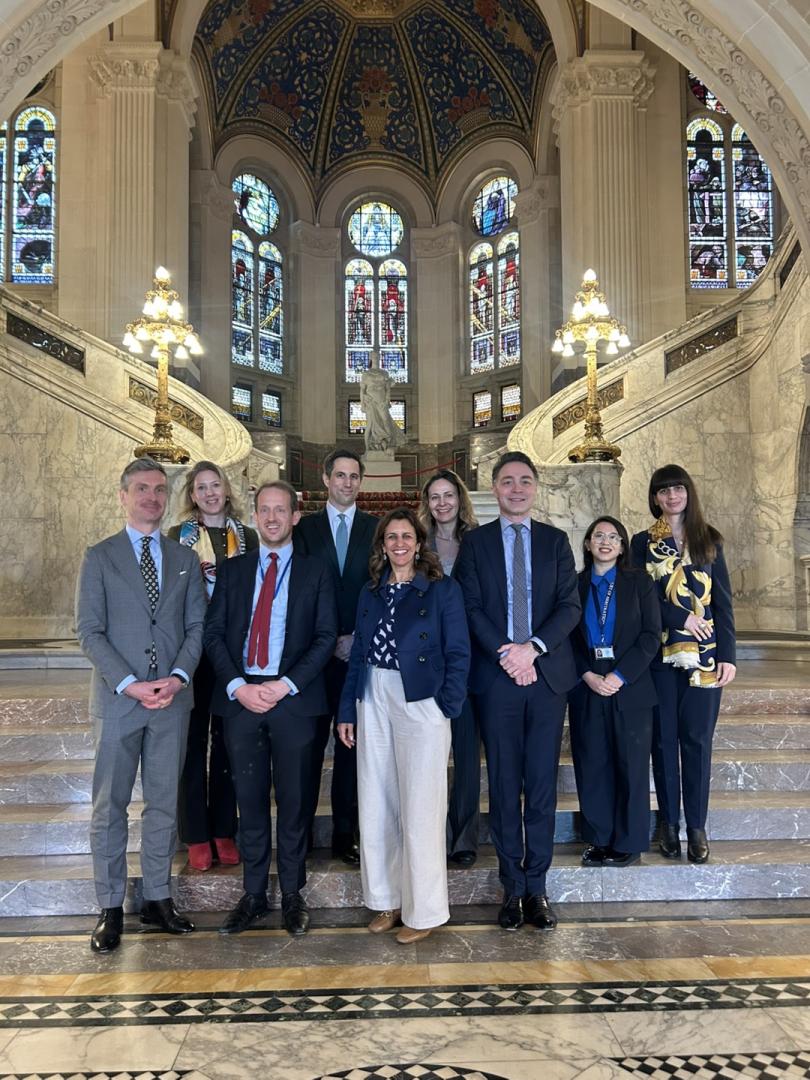
On 19 March 2026, Young ICCA hosted its Oral Advocacy Skills Workshop at the Peace Palace in The Hague, with the support of the Permanent Court of Arbitration. Framed as a mock hearing on the admissibility of evidence, the workshop offered participants a practical look at oral advocacy under pressure.
The mock problem centred on a dispute between GreenHydro Plc and Equatoriana RenPower Ltd arising out of a Purchase and Service Agreement for a green hydrogen plant project. The oralists, Irène Léger (STAUNCH) and Georgios Fasfalis (Linklaters), appeared before a Tribunal composed of Jan Ortgies (Register of Damage for Ukraine), Nadia Darwazeh (Vanguard), and Albert Marsman (De Brauw Blackstone Westbroek). Counsel debated the admissibility of the Claimant’s Exhibit C-7, a “without prejudice” offer, and the Respondent’s Exhibit R-3, an internal email from the Claimant’s in-house counsel. Their submissions were followed by detailed feedback from the Tribunal and an engaging discussion with the audience on oral advocacy in practice.
Submissions and Questions From The Tribunal
Exhibit C-7
Arguing for the Respondent, Georgios submitted that Exhibit C-7 should be excluded from the record on the basis that:
-
it formed part of confidential settlement negotiations;
-
Article 15.2 of the 2024 FAI Mediation Rules reflected the applicable principle of confidentiality; and
-
the parties’ drafting history showed that they intended confidentiality protections to extend beyond a formally commenced mediation.
The Tribunal immediately tested that argument, asking why mediation confidentiality rules should apply where no mediation had in fact taken place, what legal or ethical rule actually required exclusion, and whether the Respondent was effectively inviting the Tribunal to treat the confidentiality of settlement negotiations as a matter of public policy. In response, Georgios maintained that the protection of settlement exchanges did not depend on a narrow or formalistic view of mediation, and that the underlying rationale of encouraging candid settlement discussions justified excluding the document.
Appearing for the Claimant, Irène argued that Exhibit C-7 should be admitted because:
-
it was relevant and material to the Claimant’s position that mediation would have been futile;
-
it showed that the Respondent was unwilling to engage in any meaningful mediation process unless the Claimant first accepted a substantial price reduction; and
-
Article 15.2 of the 2024 FAI Mediation Rules was inapplicable because no mediation had commenced, no mediator had been appointed, and the final dispute resolution clause did not extend confidentiality protection to all settlement discussions.
The Tribunal probed that position just as closely, asking why a hard negotiation stance necessarily meant that a formal mediation would have been futile, given that mediation and negotiation are not the same process, and whether a settlement proposal accompanied by a deadline could nonetheless attract without-prejudice protection. Irène responded by returning to the contents of the document and to the limited admissibility question before the Tribunal, resisting the adoption of a broader or absolute proposition.
Exhibit R-3
On behalf of the Claimant, Irène argued that Exhibit R-3 should be excluded because:
-
it had most likely been obtained through improper means, with the Respondent offering no satisfactory explanation as to how it had obtained an internal legal email; and
-
it was privileged, as it reflected legal advice from the Claimant’s in-house counsel to internal recipients.
The Tribunal questioned the precise basis for asserting that the document had been obtained illegally, which law should govern privilege if Mediterraneo law did not recognise privilege for in-house counsel, and why a more protective approach should be preferred over other possible approaches. The Tribunal also pressed on whether serious concerns as to provenance were enough to shift the burden to the Respondent. Irène responded that the unexplained provenance of an internal legal communication was itself significant and that, in an international arbitration, privilege should not depend solely on the narrowest available domestic approach.
For the Respondent, Georgios resisted exclusion and submitted that Exhibit R-3 should remain on the record because:
-
the Claimant’s theory rested on speculation rather than evidence, and there was no proof that the Respondent had procured the document illegally or played any role in wrongdoing; and
-
the Claimant’s “most favoured nation” approach to privilege amounted to impermissible cherry‑picking, whereas the more principled test was that of closest connection.
The Tribunal again intervened on the pressure points of the case. It observed that the Respondent seemed best placed to explain how it had obtained the document and asked whether any evidence had been offered on that score. Later in the hearing, the Tribunal also posed a broader procedural question to both sides: if the Tribunal had already seen the documents and heard extensive arguments on them, could it really “unsee” them if it later decided to exclude them? Both oralists accepted that it could and should, in the sense that excluded material could not properly form part of the Tribunal’s reasoning on the merits.
Before announcing its ruling, the Tribunal invited the audience to vote informally on the possible outcomes. It then rendered a unanimous procedural decision excluding both documents from the record. As to Exhibit C-7, the Tribunal considered that, even if the precise reach of mediation confidentiality was open to debate, there was sufficient settlement context and public-interest concern in protecting without-prejudice exchanges to justify exclusion. As to Exhibit R-3, the Tribunal did not identify a single decisive rule compelling exclusion, but concluded that, in an international arbitration, it would be unfair for the protection of legal communications to turn solely on differences in national treatment of in-house counsel privilege. It therefore adopted a more protective approach and excluded that document as well, while noting that another tribunal might have reached a different conclusion.
Tribunal Feedback and Audience Discussion
The Tribunal’s feedback to the oralists was one of the most valuable parts of the workshop. The mock‑hearing was described as an excellent final round, and both Georgios and Irène were praised for the quality of their advocacy. Across both presentations, the Tribunal commended the oralists’ strong structure and clear thematic framing, their composure in handling difficult questions, persuasive delivery, including strong eye contact and body language, and their ability to move fluidly between prepared submissions and questions from the Tribunal without losing their train of thought.
The audience discussion that followed brought together questions on cultural differences in oral advocacy, including the use of hand gestures, how to answer difficult Tribunal questions without relying on stock phrases, and how to handle weaknesses or gaps in the record.
The Tribunal’s practical advice may be summarised as follows:
-
Be yourself — gestures are perfectly acceptable so long as they are natural and not distracting; and speaking English with an accent is not a weakness, though speaking slightly slower can help the Tribunal follow the submission.
-
Pause and answer clearly — a short silence is not harmful if it helps counsel give a direct and thoughtful answer.
-
Address weaknesses proactively if they are likely to arise; and preparation should focus on the hardest questions the record is likely to generate.
The workshop offered far more than a debate on the admissibility of the two exhibits. It served as a reminder that effective oral advocacy is not about sounding theatrical or invulnerable, but about judgment: knowing which points to press, which concessions to make, how to respond under pressure, and how to remain credible throughout.
Want to receive event updates from Young ICCA?
Sign up for Young ICCA Membership and you'll receive event notifications direct to your inbox.