Young ICCA Workshop on Enforcement of Arbitral Awards



Young ICCA is pleased to invite you to Mind the Gap: Transforming Abstract Awards into Concrete Assets, a workshop on the recognition and enforcement of arbitral awards taking place in London during London International Disputes Week (LIDW).
The workshop will provide participants with a practical introduction to the New York Convention on the Recognition and Enforcement of Foreign Arbitral Awards, covering the legal framework governing recognition and enforcement proceedings, the principal grounds on which enforcement may be resisted, and the practical challenges parties commonly encounter across jurisdictions.
The second half of the workshop will feature an interactive exercise and guided discussion, allowing participants to apply the concepts discussed and receive real-time feedback from experienced practitioners.
The session will feature opening remarks by Steven Finizio, and a panel discussion with Jakob Hübert, Rory McLeod, Tobias Vollmer, and William Teddy.
Young ICCA is grateful to WilmerHale for generously sponsoring and hosting the workshop, and to Raedas for its support.
We look forward to welcoming participants for an engaging and practice-oriented discussion.
Post-Event Report
Report prepared by Gaurika Mohan and Nyein Sanda Kyaw (Arbitration Chambers)
On 5 June 2026, Young ICCA hosted an interactive workshop on “Mind the Gap: Transforming Abstract Awards into Concrete Assets” at WilmerHale, London, during the London International Dispute Week (LIDW). The event was jointly organised by Young ICCA, WilmerHale, and Raedas and explored the post-award phase of international arbitration, focusing on practical realities and strategies for converting favourable awards into tangible value.
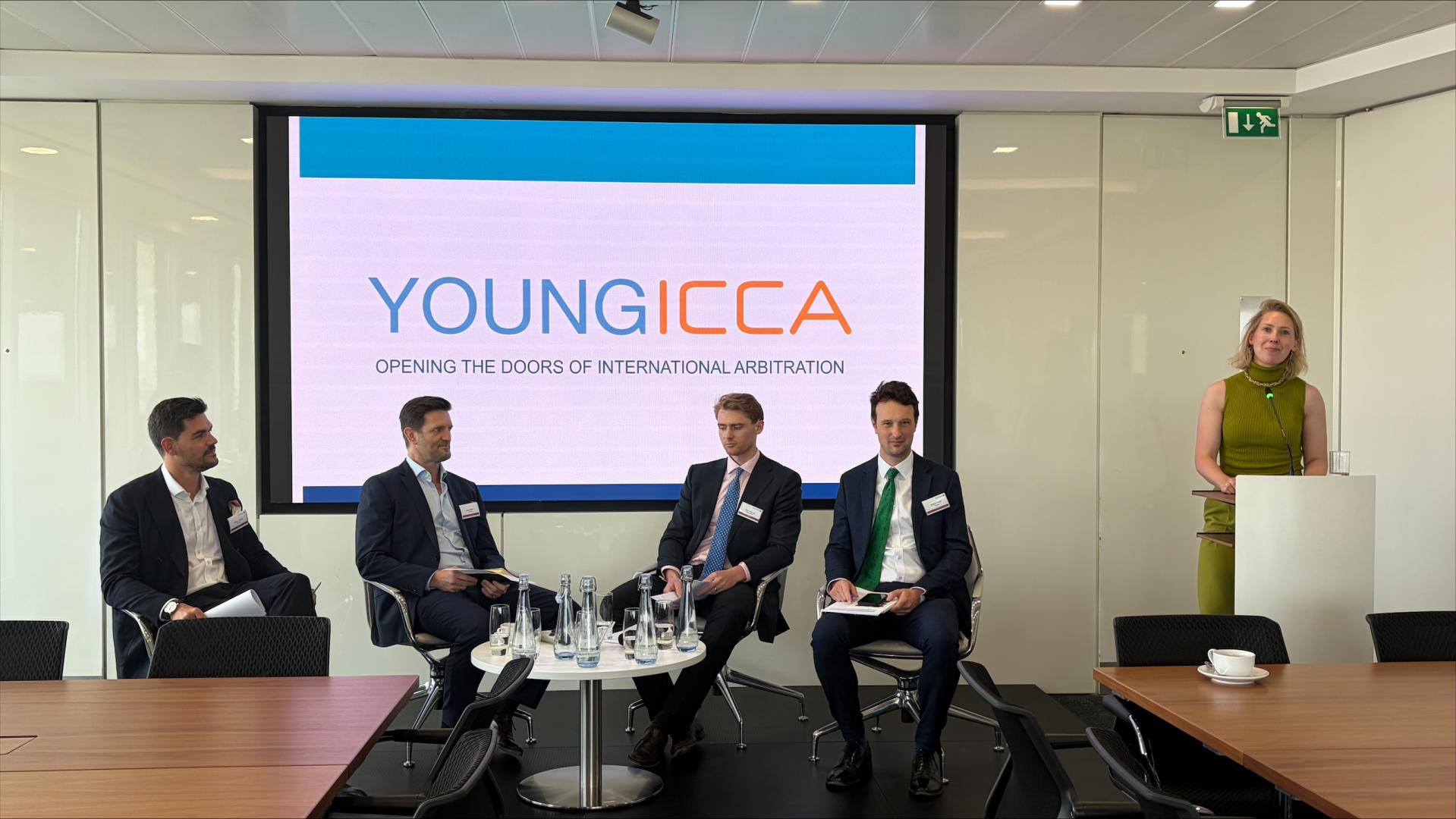
The event opened with remarks by Steven Finizio of WilmerHale and was structured into two parts. The first half consisted of a moderated panel discussion with Jakob Hübert from Nivalion, Rory McLeod from WilmerHale, and Tobias Vollmer and William Teddy from Raedas, who brought perspectives on arbitration practice, insurance, third-party funding, and investigative work in high-stakes international litigation and arbitration. The second half consisted of an interactive case study session during which the audience actively participated through a structured Q&A on the fictitious enforcement scenario. This format facilitated an engaged exchange of views on enforcement strategies and practical challenges encountered in multi‑jurisdictional recovery efforts.
Part I: Panel Discussion
The panel discussion highlighted the significant challenges involved in the enforcement of arbitral awards across different jurisdictions, emphasising that outcomes are highly dependent on local legal frameworks, procedural delays, and the varying enforcement cultures of states. Panellists noted that voluntary compliance is rare and may be met with resistance, strategic delay, and reliance on set‑aside proceedings. Enforcement is further complicated by sovereign immunity, public policy objections, fraud allegations, and jurisdiction‑specific defences, and even successful resistance to set‑aside applications does not necessarily translate into payment.
The discussion drew on well‑known enforcement examples such as the Eurocontrol‑related subpoenas in Spain’s 2026 FIFA campaign, Cairn v India involving attempts to attach Air India assets, and the decade‑long Yukos saga. Together, these examples helped highlight how complex cross‑border resistance can undermine or delay the value of even substantial awards.
Arbitration practitioner’s viewpoint
From a practice standpoint, enforcement strategy requires a coordinated, multi-jurisdictional approach, supported by clear analysis of enforceability, timeframes, and the location and accessibility of assets. While resisting parties do sometimes succeed in or partially undermine awards, practitioners increasingly rely on coercive tools and measures to counteract obstruction. These tools, such as disclosure orders and asset tracing mechanisms, including third-party subpoenas in complex cases, aid in uncovering hidden assets, mapping corporate structures, and identifying viable enforcement pathways.
Overall, enforcement requires anticipating delay, resistance, and political complexity, particularly in state-related disputes where immunity issues and unpredictable behaviour often arise late in the process.
Insurance and Funders’ viewpoint
Insurance is playing an increasingly important role in managing the enforcement risk, which has become more significant given the lengthy timeframes often involved in enforcing awards. Since the time value of money further reduces the effective recovery over the duration of enforcement, both insurers’ and funders’ focus is on realistic assessment of recoverability rather than the actual award amount. However, funders and insurers approach risk from different perspectives. Funders focus on whether the award can be realistically turned into value and take on the risk of the entire claim. Insurers, on the other hand, typically underwrite a specific and narrower exposure, which can make insurance a more targeted and cost‑effective tool. Judgment preservation insurance is one example of this narrower underwriting, although it remains challenging because insurers must be prepared to cover the full loss if enforcement fails.
Insurance also facilitates award monetisation by enabling funders and claimants to realise value earlier, while creating opportunities for secondary market transactions, including sales of awards to distressed-debt investors.
Investigator’s viewpoint
From the investigator’s perspective, tracing the assets is the most critical exercise and should begin even before the award is rendered. Effective enforcement depends on having a clear understanding of the global asset landscape, identifying which assets may need to be preserved, and determining which jurisdictions are arbitration-friendly or present a heightened enforcement risk. Early interim measures can quickly reveal whether a counterparty is acting dishonestly, including through attempts to dissipate or restructure assets, and can enable the shaping of a realistic and targeted enforcement strategy.
Panellists on English Court’s response to third-party funders
The panel also discussed recent English decisions that highlight differences in how the courts approach enforcement under the ICSID Convention and the New York Convention. In a recent case, the English courts held that only the original parties to the arbitration may enforce an ICSID award. ICSID operates as a self‑contained treaty system, and the court did not accept an assignment of enforcement rights. By contrast, under the New York Convention, assignments are generally recognised, and award creditors can enforce in their own name.
Additionally, sovereigns have increasingly invoked state immunity in enforcement proceedings, arguing that neither the ICSID Convention nor EU law provides a clear waiver of immunity. English courts have generally taken the view that the ICSID Convention does not expressly waive immunity from execution, which can limit the steps available to award creditors.
Part II: Case Study
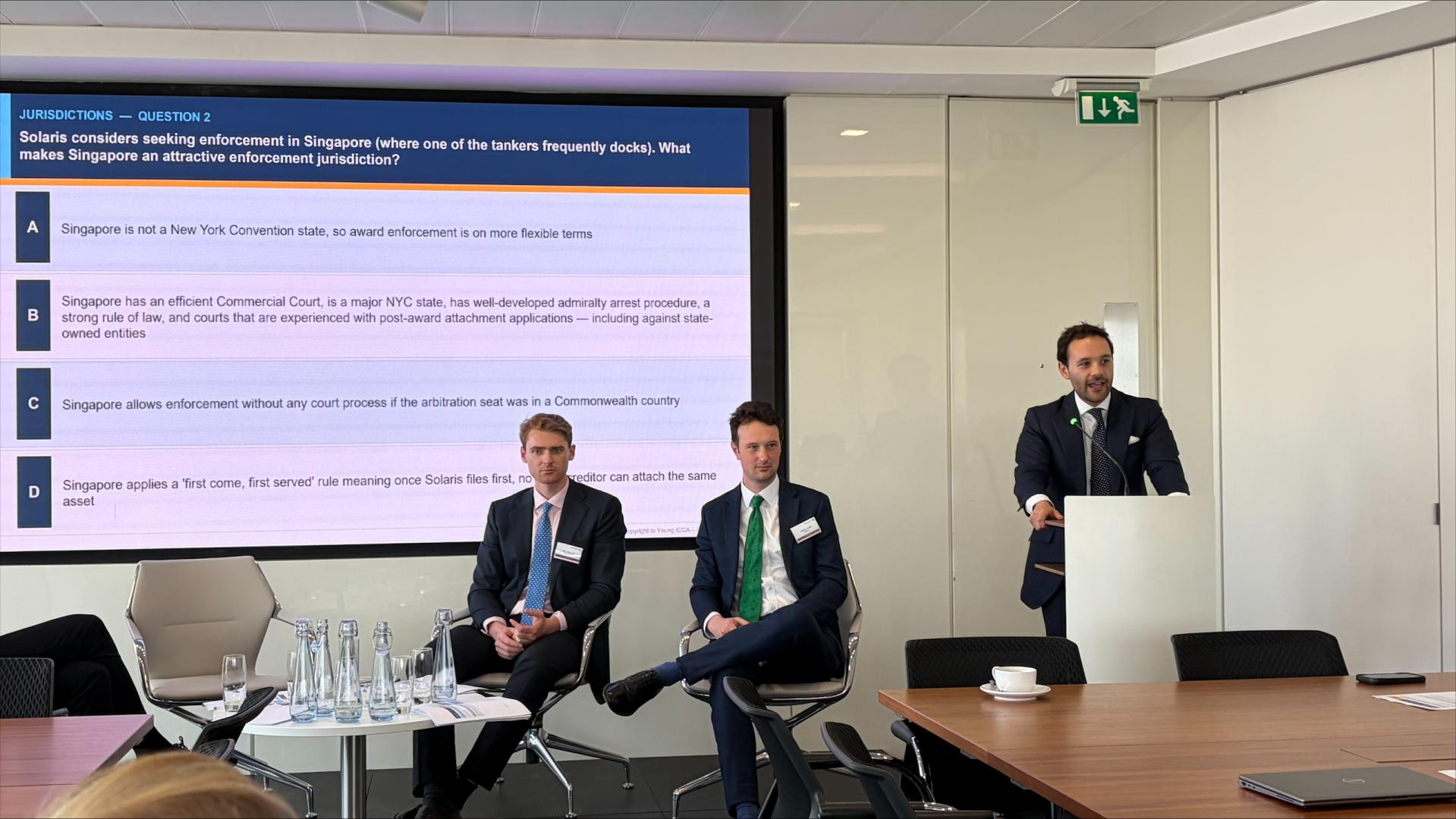
The audience participated in a hypothetical and interactive case study concerning the enforcement of the arbitral award. Participants were divided into six groups, each assigned a specific topic to analyse, namely (i) asset classes, (ii) sovereign immunity, (iii) veil piercing/alter ego, (iv) recognition and enforcement, (v) pressure points, and (vi) jurisdictions. The workshop concluded with an interactive Q&A discussion, where participants applied the principles discussed during the session in a live simulation based on the case study. The exercise provided an opportunity to test practical approaches, develop reasoned responses, and share perspectives on enforcement strategy in a dynamic, practice-oriented setting.
Want to receive event updates from Young ICCA?
Sign up for Young ICCA Membership and you'll receive event notifications direct to your inbox.